Selected Study • Coastal Redevelopment Strategy

Irish Coastal Links Study

A strategic redevelopment study exploring how an established Irish links landscape could be re-routed, clarified and strengthened through pragmatic reuse, restrained intervention and a fuller relationship with the coastline.

The study explored how an established links landscape could be reconfigured to make better use of its dune terrain, coastline and strongest natural settings.
Project Type
Strategic Redevelopment Study
Landscape
Links
Location
East Coast of Ireland
Status
Selected Design Study
Services
Routing Design, Golf Course Architecture, Strategic Planning, Visualisation, Masterplanning, Phasing Strategy
Context

Revealing the landscape and choreographing the round.

The study began with a wide-ranging brief, but one shaped by clear practical constraints. The course needed to be capable of closing for a relatively short period before reopening quickly, placing a strong emphasis on deliverability, efficiency and the intelligent reuse of existing corridors where they continued to make sense. The task was therefore not to start again unnecessarily, but to identify where the existing course could be rationalised, clarified and strengthened.

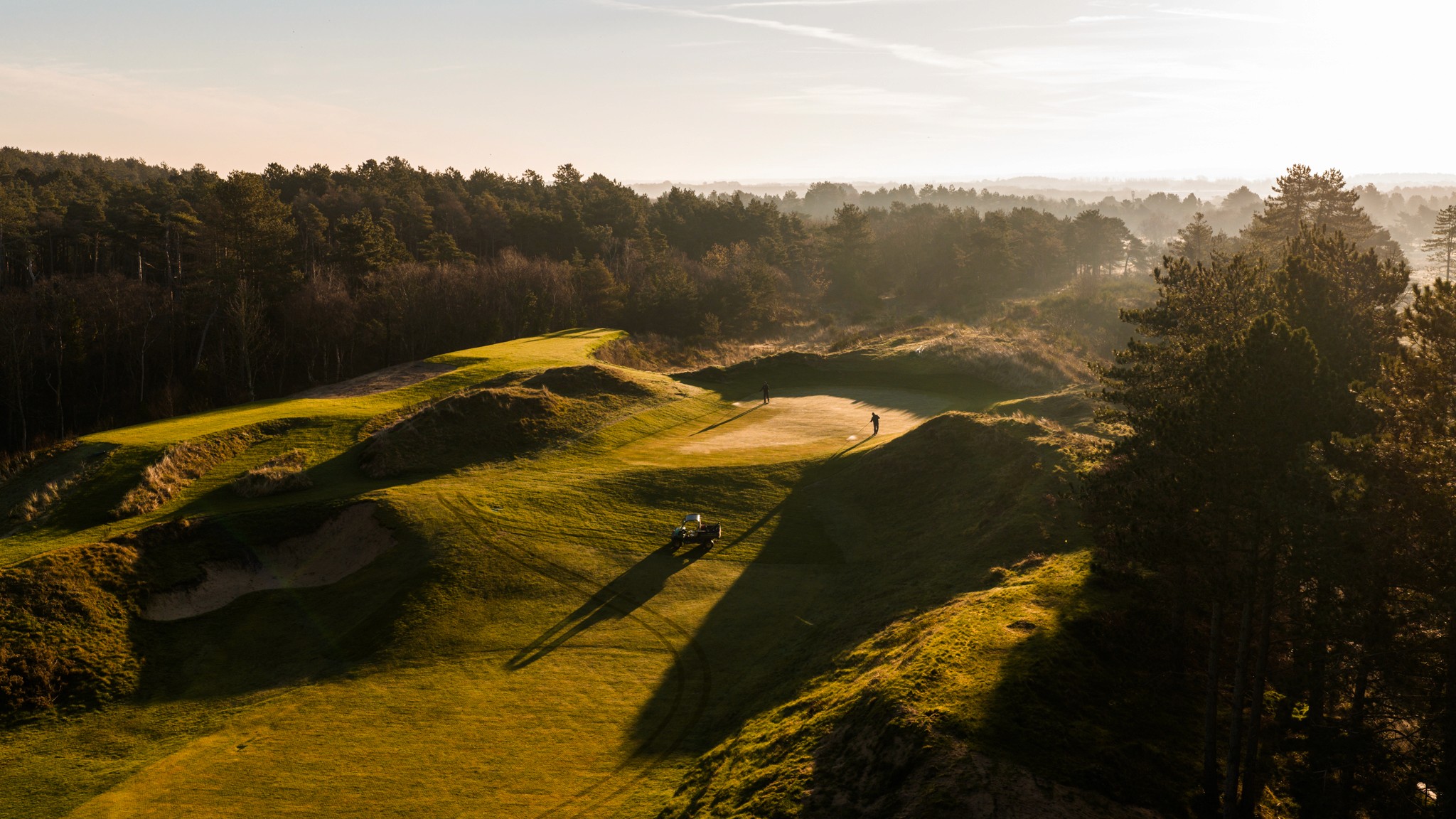
The primary opportunity lay in revealing the landscape that was already there. Across the site, rugged duneland had become cluttered by invasive and non-native vegetation, weakening the course’s sense of place and obscuring many of its strongest coastal relationships. The proposal sought to restore a more authentic east coast Irish links character, creating a clearer journey through the property and ensuring the key moments of the round coincided with the most valuable locations on the site.

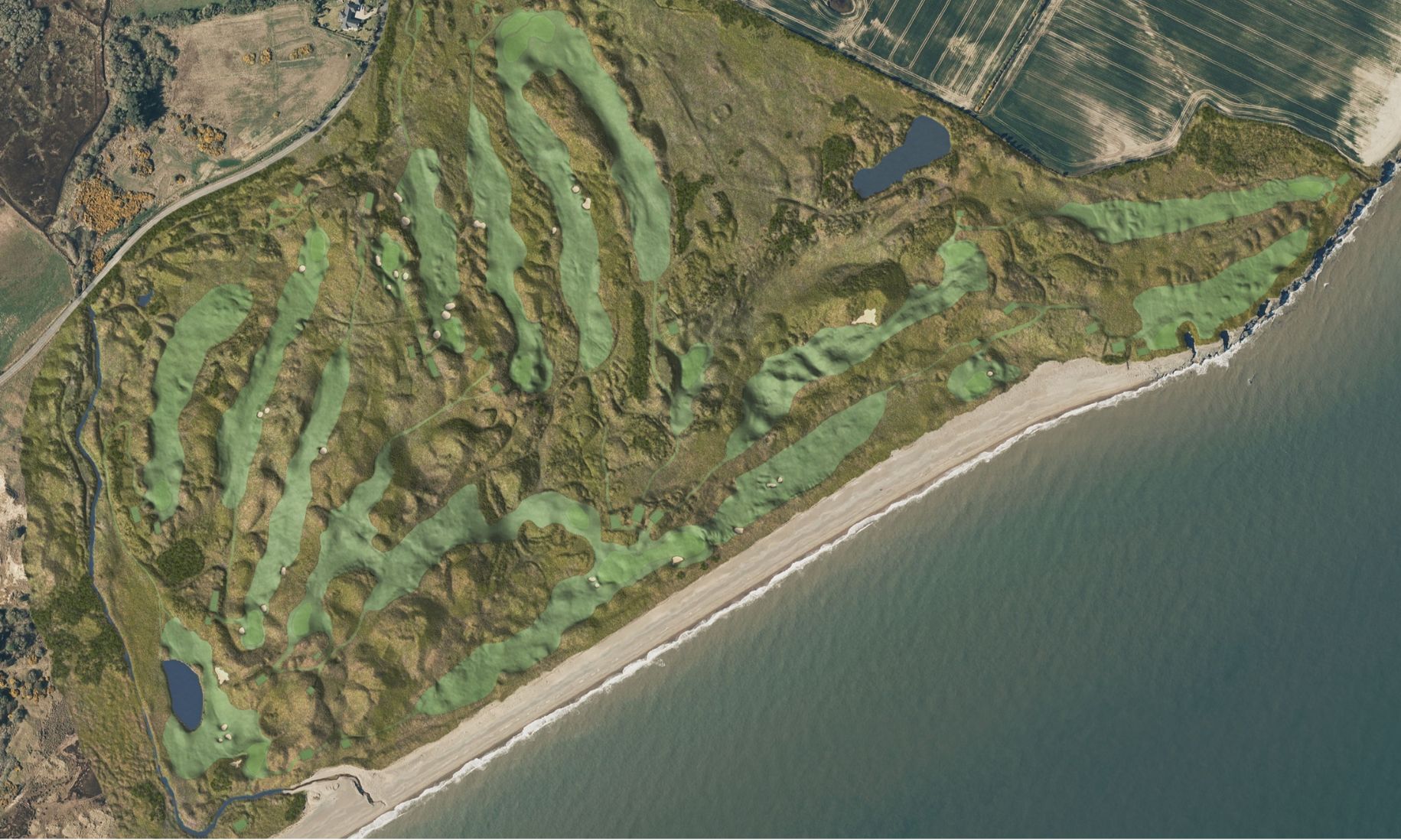
The proposal used selective re-routing to bring golfers to the water at key moments while retaining and refining existing corridors where they supported a more efficient and deliverable construction strategy.
Analysis

Strategic Themes

The proposal explored how pragmatic redevelopment, landscape restoration and routing sequence could combine to create a more authentic and memorable coastal links experience.

01

Cluttered Landscape

The site contained beautiful and rugged duneland, but much of its character had become obscured by invasive and non-native vegetation. Restoring a clearer, more open relationship between golf, dunes and coastline was central to the architectural vision.

02

Underused Coastline

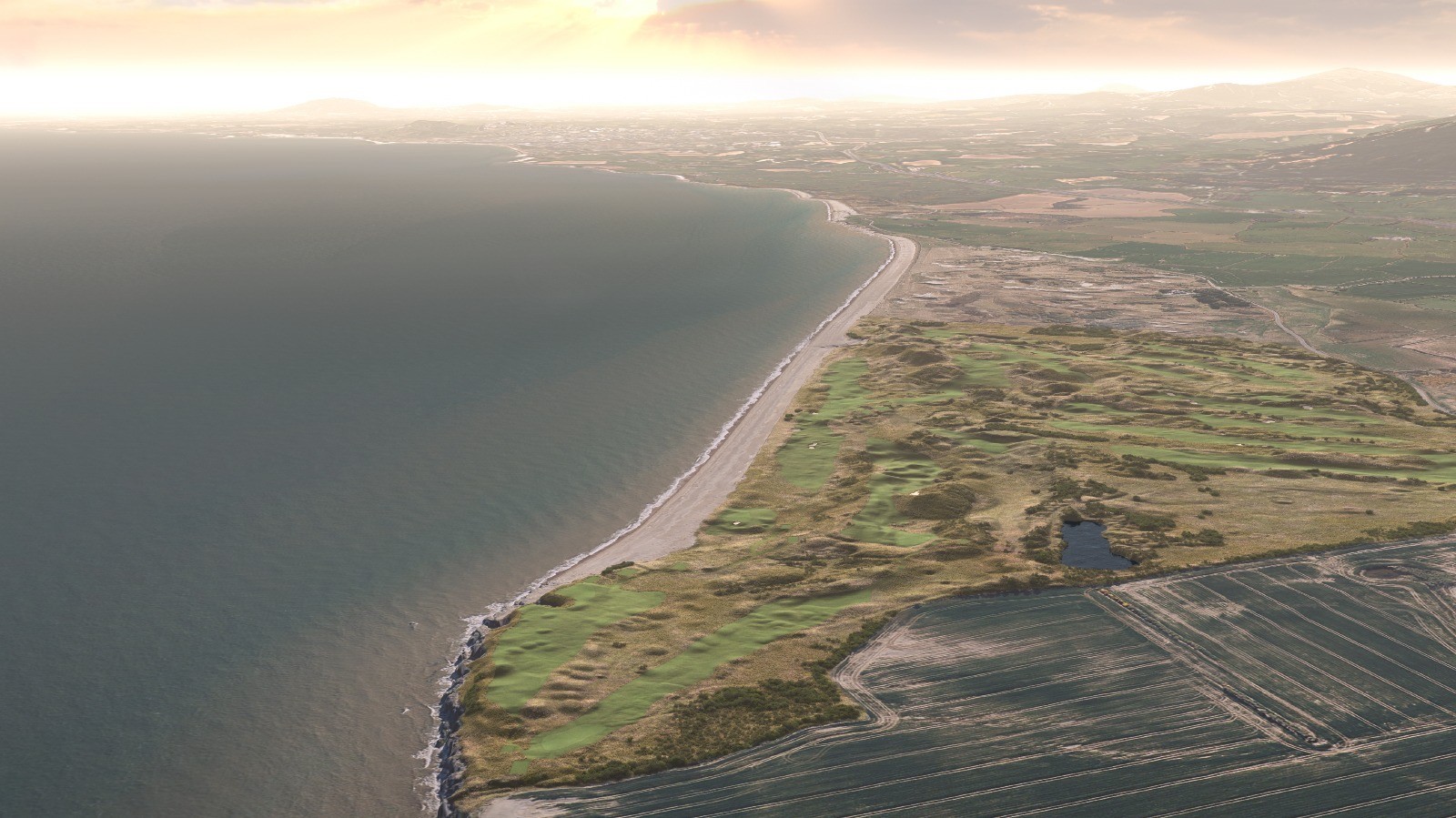
Although the property possessed extensive water frontage, the existing routing did not fully capitalise on its strongest coastal moments. The proposal increased the number of greens beside the water and created more varied interactions with the sea throughout the round.

03

Deliverability & Reuse

The brief placed strong emphasis on efficient construction and a relatively short closure period. The routing therefore retained existing corridors and infrastructure where possible, while making targeted changes in the locations where the architectural value justified intervention.

04

Communicate clearly

Visual material and member communication helped the project move from concept to implementation.


Before

After
Before / after

Strategic clarity through routing, reuse and restraint.

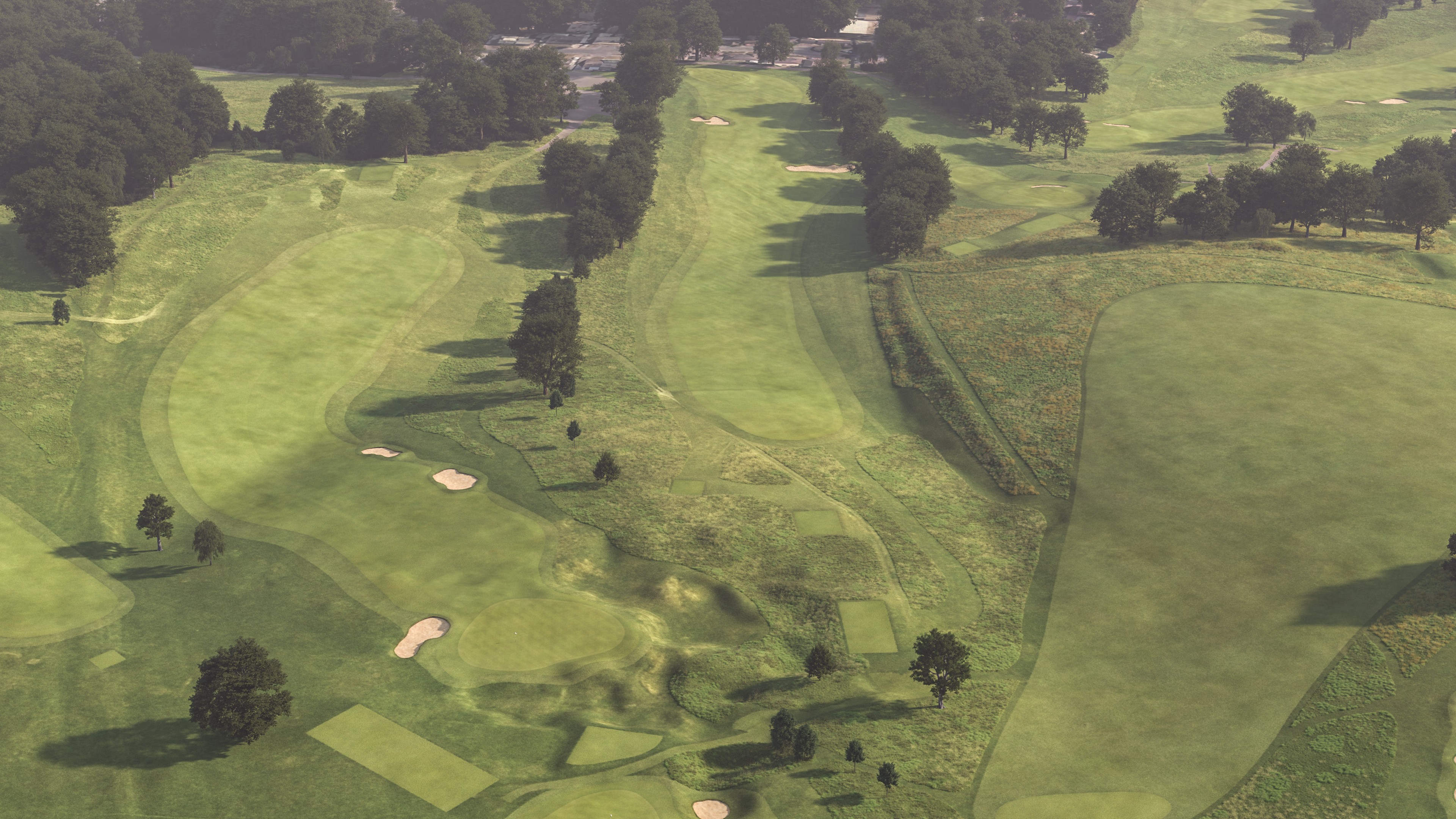
The study reconsidered how the course moved through the landscape, identifying opportunities to simplify weaker corridors, improve strategic variety and bring the round into closer contact with the site’s strongest duneland and coastal settings.

Rather than pursuing wholesale reconstruction, the proposal retained key existing elements where they continued to serve the routing, while selectively introducing new holes and adjusted corridors where the landscape justified change. The result was a more coherent journey through the property, shaped by coastline, vegetation, natural dune movement and the practical realities of delivery.

Proposal

Design Principles

Several core principles informed the proposal, from the broader routing strategy to the detailed design of individual holes.

01

Reveal The Dunescape

Selective clearance and landscape simplification were proposed to restore a more authentic links character, allowing dune movement, native vegetation and coastal exposure to shape the atmosphere of the course.

02

Choreograph The Coastline

The routing was structured so that the most significant encounters with the water occurred at the right moments in the round, rather than treating the coastline as a background feature.

03

Reuse With Purpose

Existing corridors, greens and infrastructure were retained where they supported the new routing, reducing unnecessary reconstruction while preserving a link to the course’s previous form.

04

Create Strategic Contrast

The proposal used width, angle, visibility, centre-line hazards and changing coastal orientation to create strategic decisions that remained clear, varied and playable across differing standards of golfer.

Selected Hole Studies

Exploring strategic golf through contour, angle and atmosphere.

The proposal included a series of individual hole studies examining how routing, visibility and natural landform could create memorable golfing moments while maintaining restraint and architectural coherence across the wider course.

01

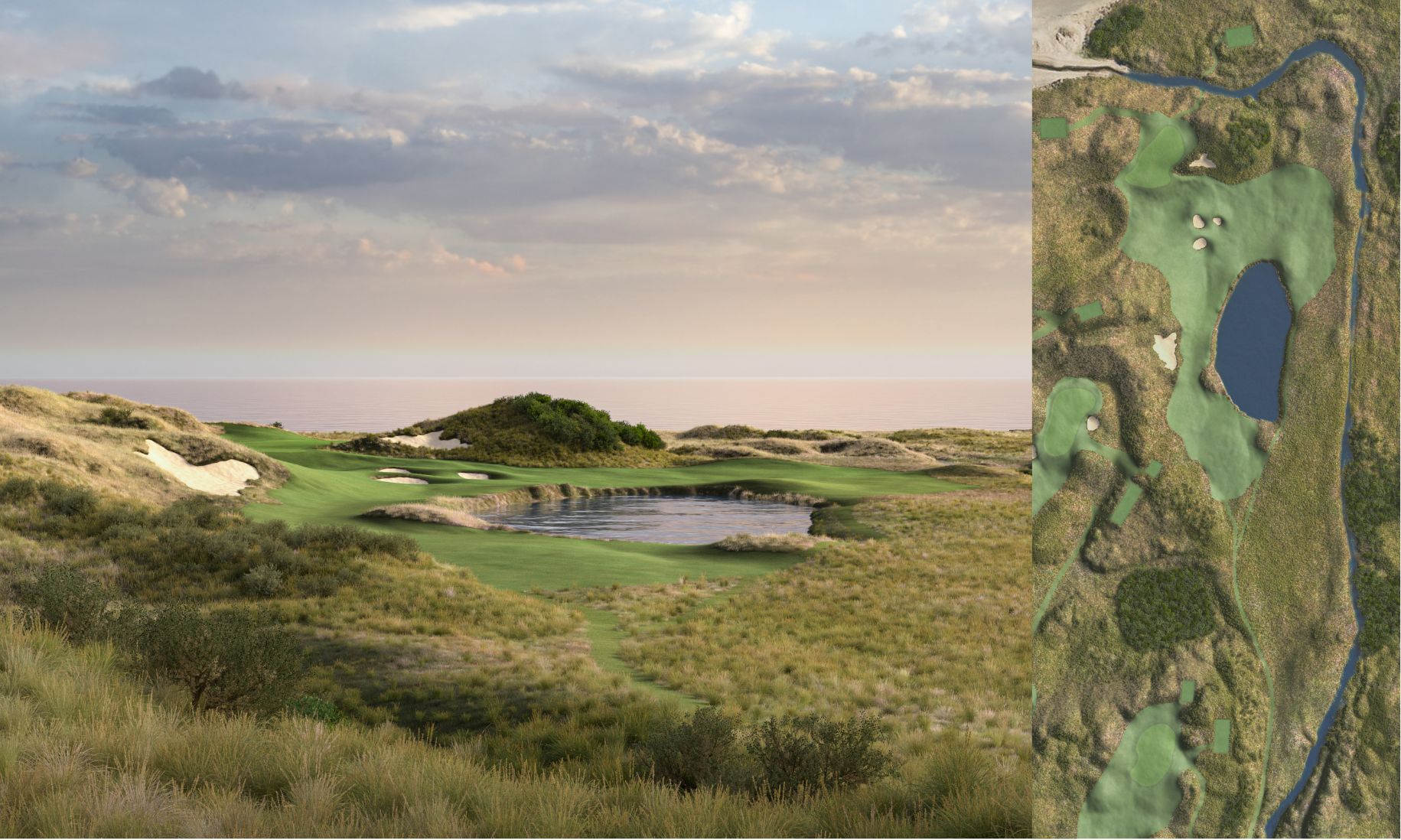
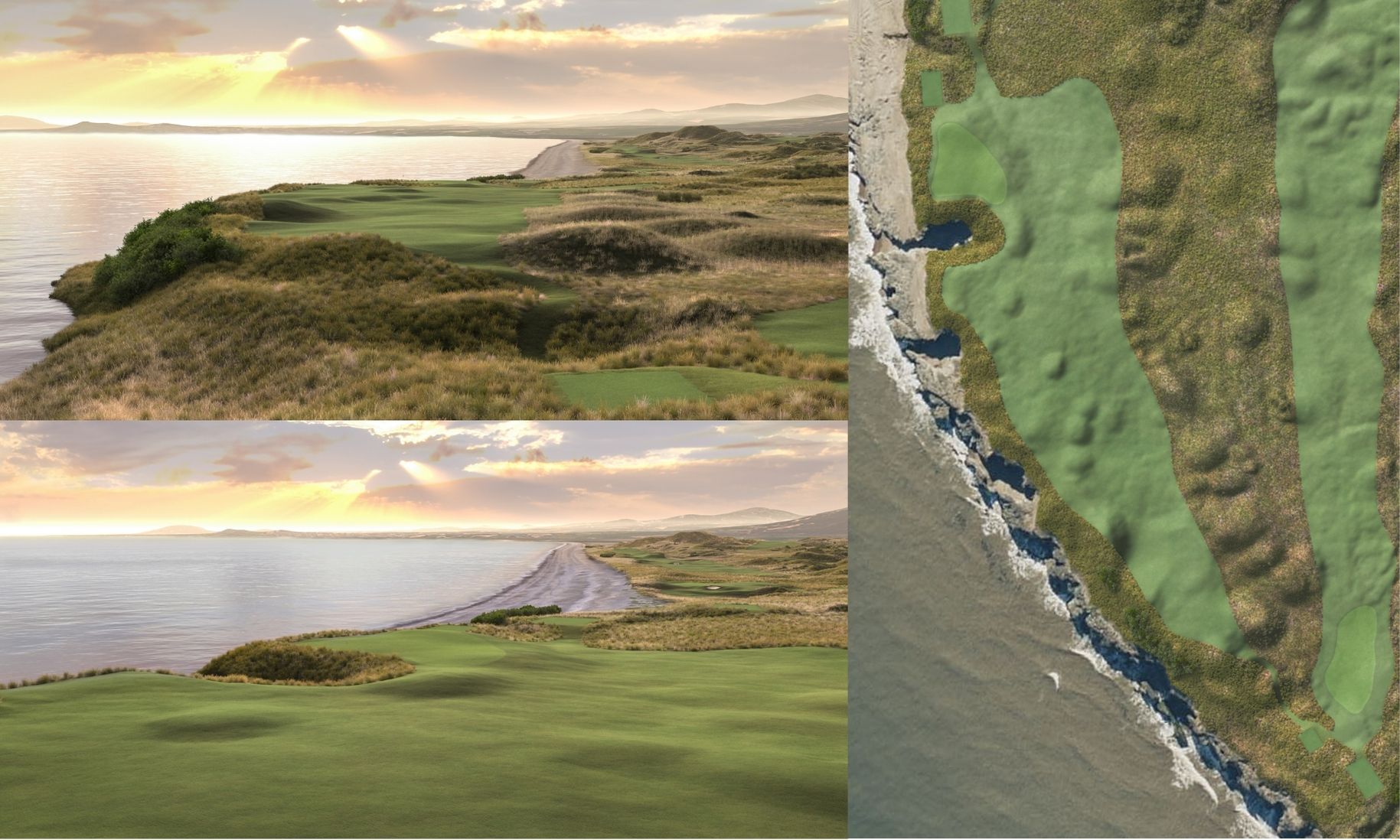
Hole 6 • Ecological Constraint Turned Strategic Short Par 4

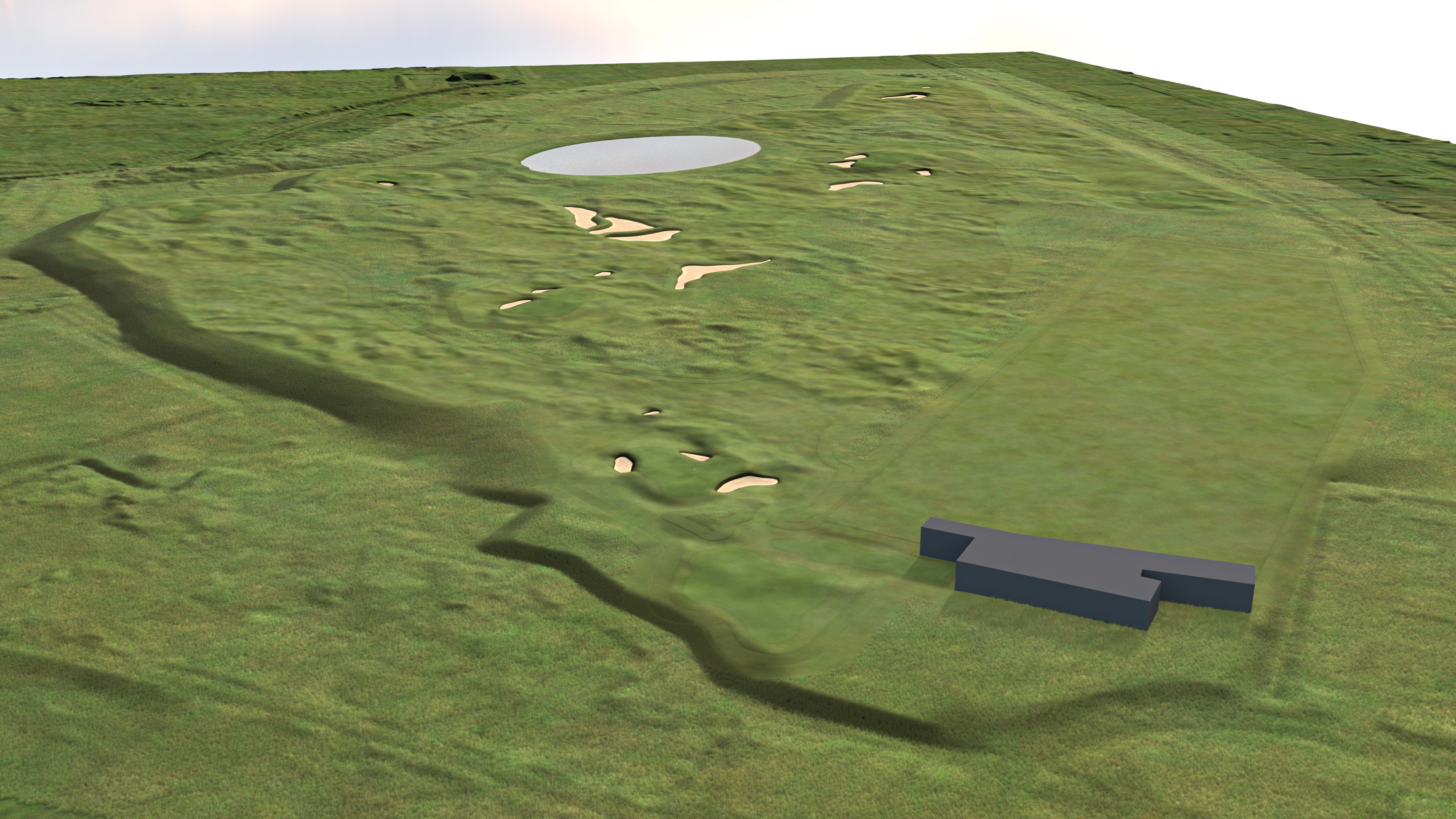
The new 6th was shaped around an existing pond running down the left side of the current hole, which we were advised should be retained for ecological reasons. While our initial preference would have been to remove it, once this constraint was established the design sought to make the pond central to the strategy of the hole rather than treat it as an awkward limitation.

Rather than leaving the pond as a penal hazard beside a long second shot, the proposal reimagined the hole as a much shorter par 4, with tees set high on the main ridge line and a dramatic drive played to the expansive fairway below. The pond became a strategic dilemma from the tee. Players able to make the carry and find the left-side channel were rewarded with a clear view into the green, while those playing safely right of the centre-line bunkers beyond the pond faced a more obscured approach, with the green set into the dunes to block them visually and physically from the best angle.

02

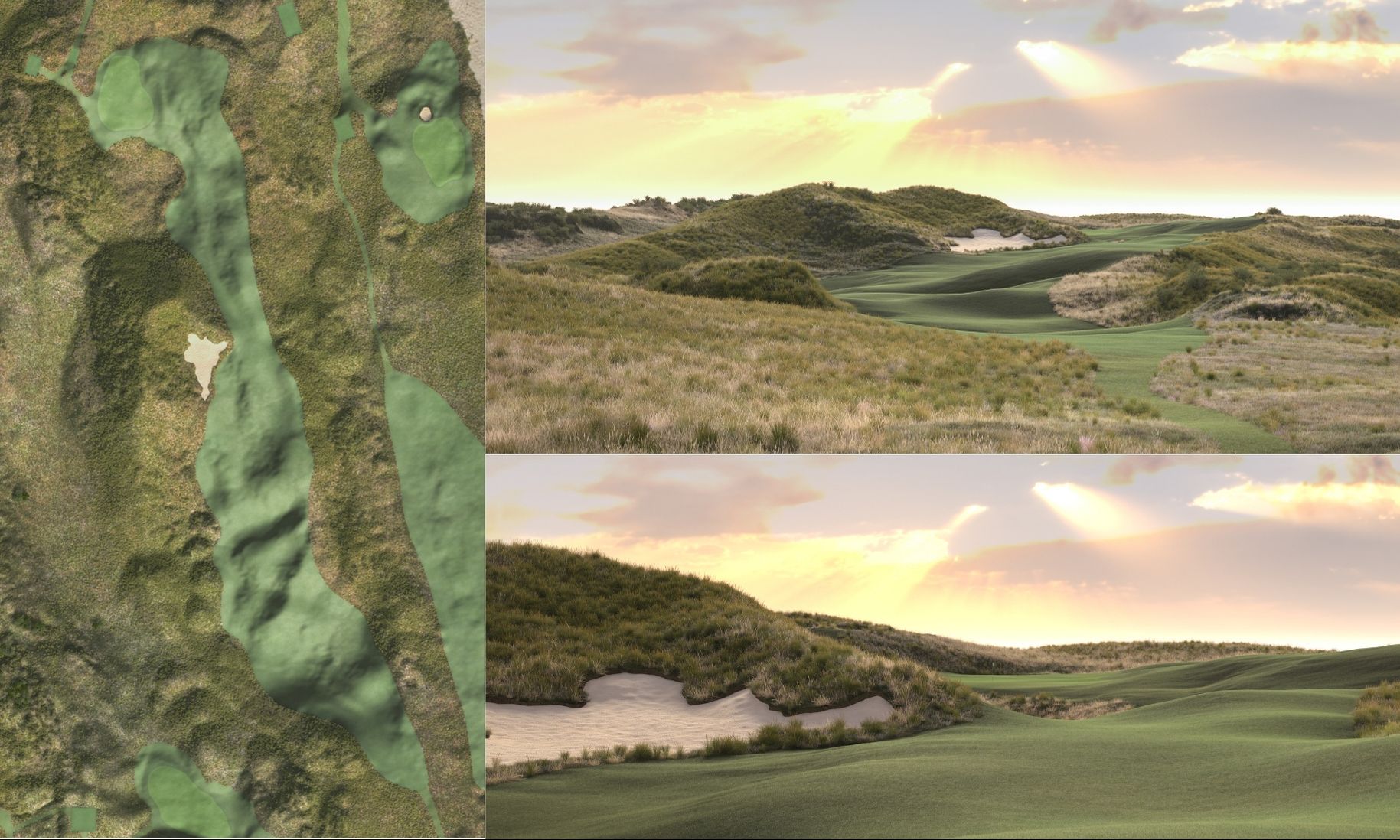
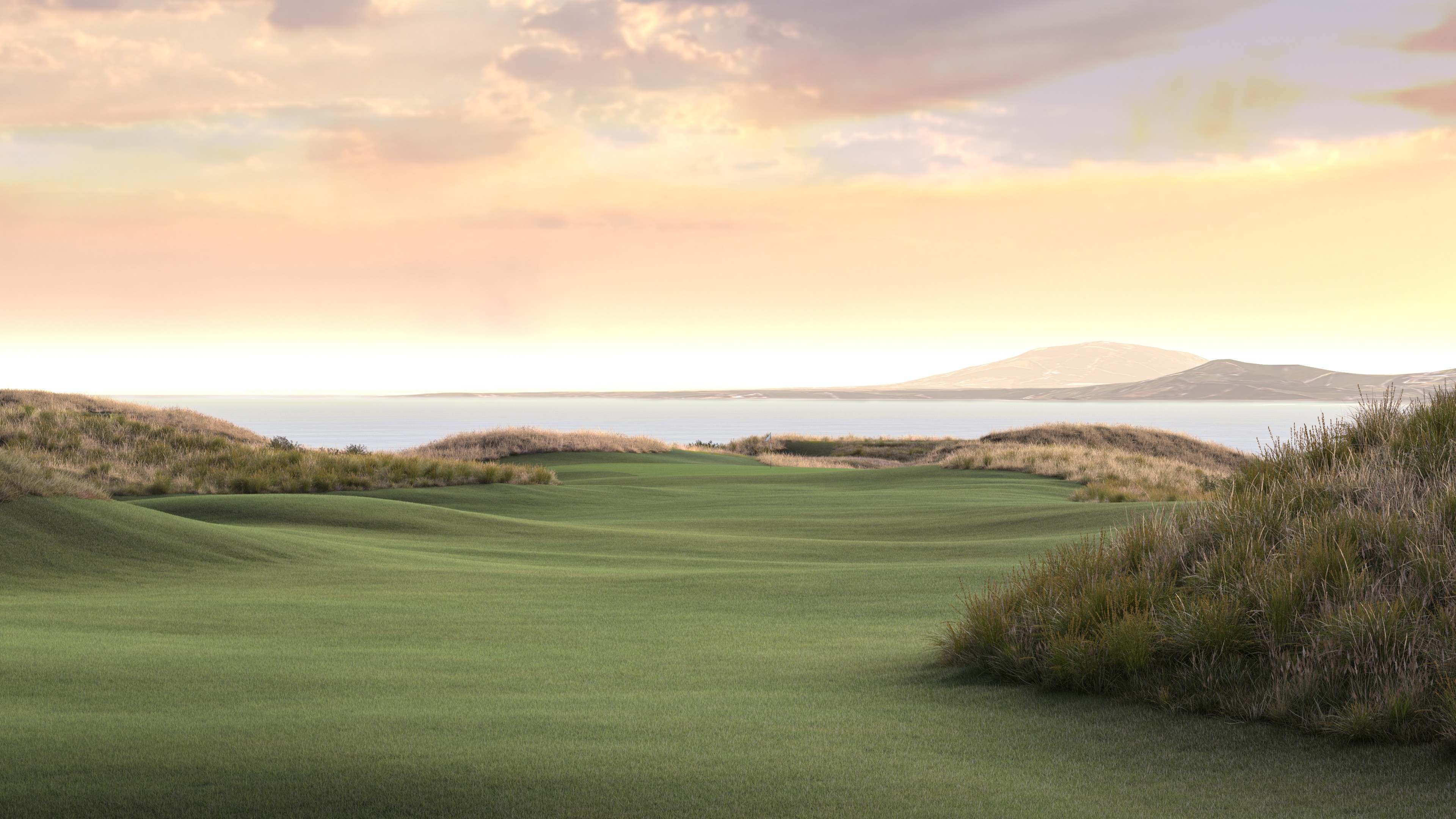
Hole 13 • Strategic Par 5 Through Natural Terrain

The 13th was structurally important within the routing, using undeveloped golfing terrain of high quality to move naturally from the central node of the site into a more elevated section of the property. By culminating at a reused existing green, the hole also retained valuable infrastructure and supported a more pragmatic construction strategy.

As a par 5, the hole used the natural topography to create a genuine positional challenge. Golfers playing close to the right edge of the fairway would gain the best chance of reaching the green in two, with the ground contours assisting the long approach. Safer drives played left would face a more obscured second shot, complicated by a dramatic blowout bunker in the middle of the hole and a demanding carry over the bowl short of the green.

03

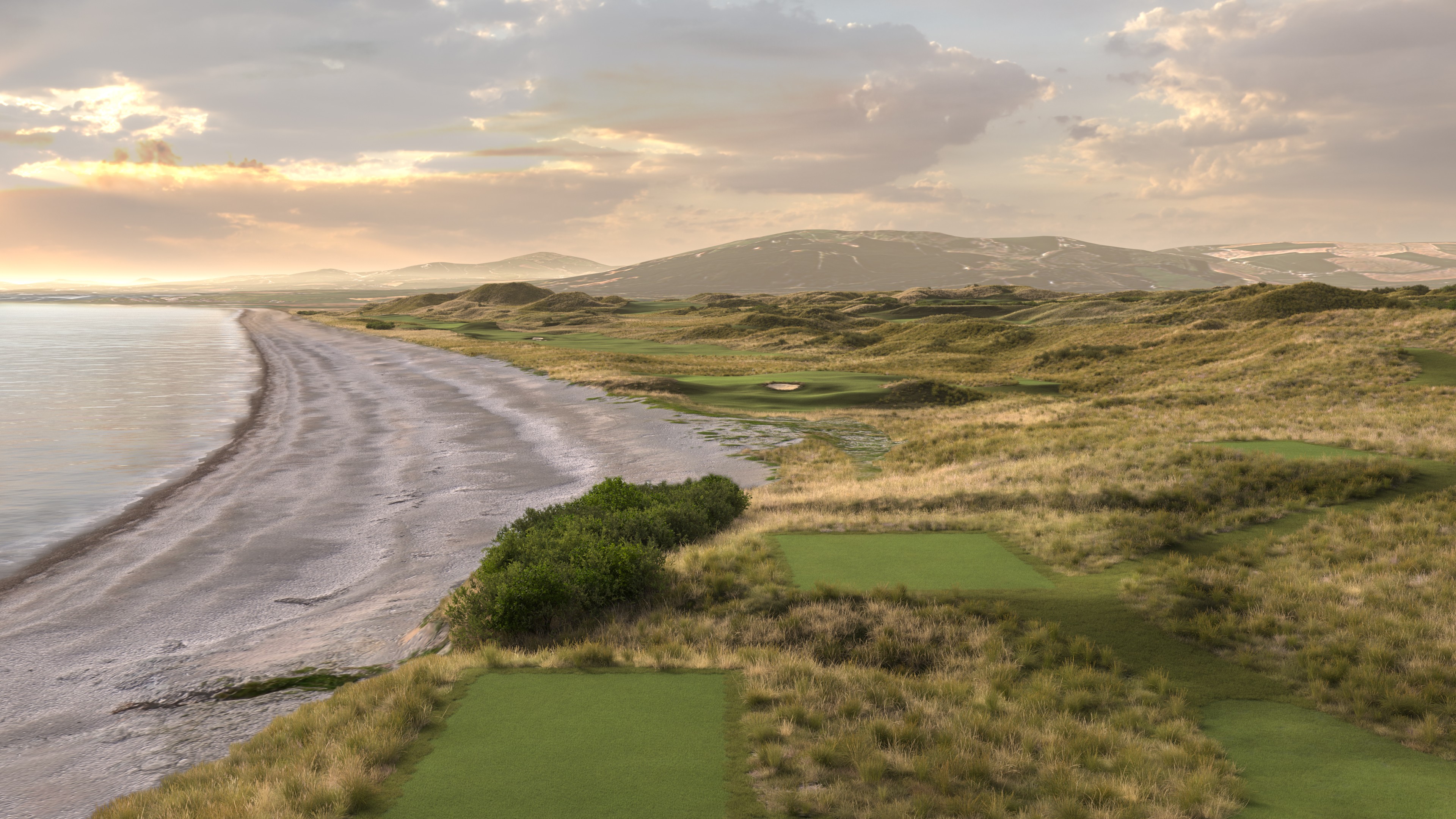
Hole 15 • Coastal Risk-and-Reward Short Par 4

The 15th was perhaps the most natural hole in the proposal and a direct result of the wider structural reconfiguration of the routing. A key aim was to bring the climactic closing stretch into the southern corner of the property, with the sea now on the golfer’s left rather than always to the right as had previously been the case.

The hole was designed as a drivable par 4, but not a simple one. The green was sited beyond a natural rocky cove inlet, allowing the boldest players to attempt the surface only with an exceptionally high, soft drive or a carefully shaped running shot from short right. The more intelligent route may be an iron played close to the cliff edge, leaving a pitch along the length of the green and a strong birdie chance. Those who attack from the tee but bail out to the apparently safer right are left with an uphill pitch played towards the sea, with a steep run-off short of the green making the recovery far more exacting.

04

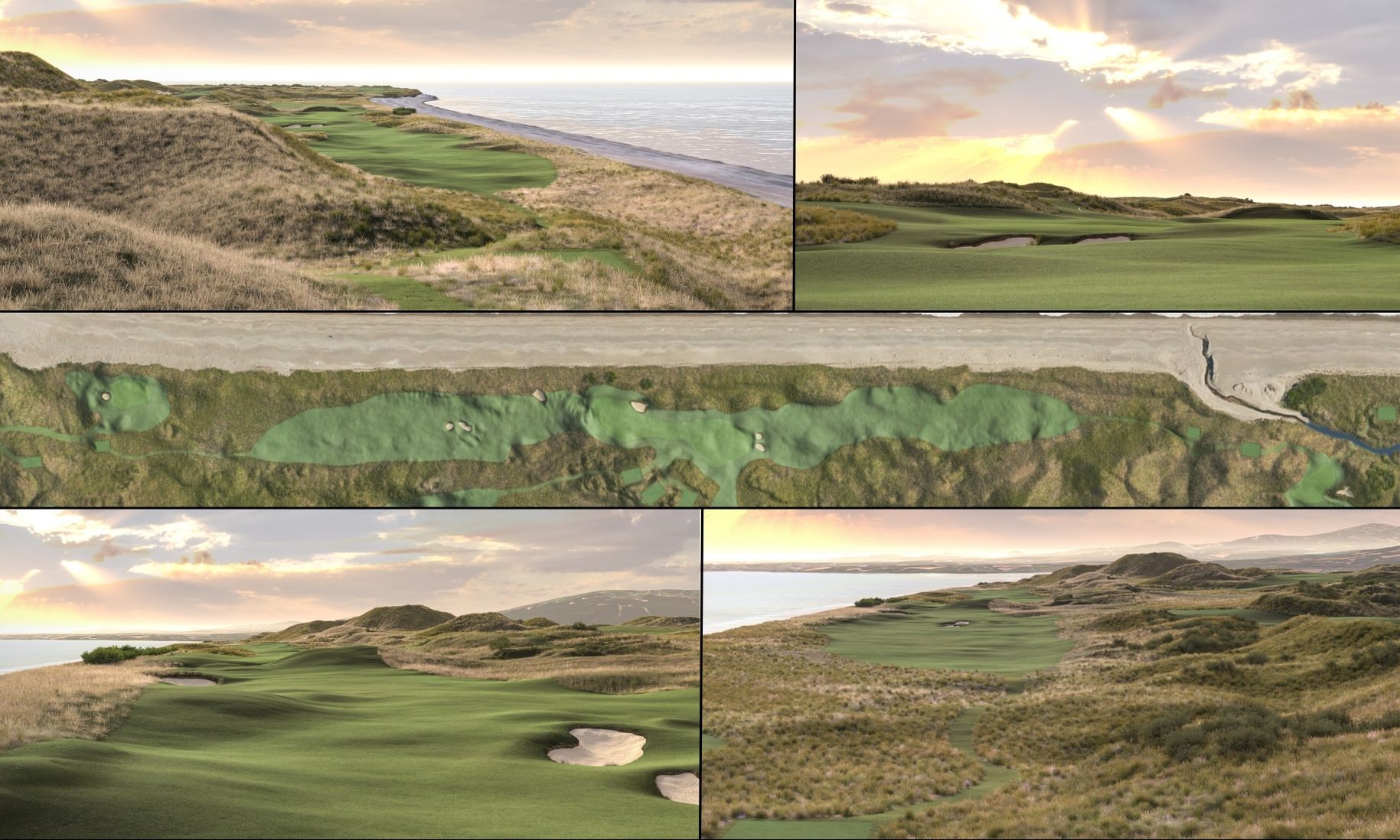
Holes 7 & 17 • Reused Double Green At The Beachfront

One of the most important existing features on the property was a long green set at the centre of the site’s beach frontage. Rather than remove or replace it, the proposal sought to retain and reinterpret this feature as a double green, allowing the course to visit one of its most valuable coastal locations twice within the round, but from entirely different directions.

The 7th retained a version of the existing hole, approached from a revised teeing ground to make better use of the sea frontage. The far section of the green was then approached from the opposite direction as the 17th, creating a late-round return to the coastline. By removing a section of enclosing dune, players who challenged the left side of the 17th fairway near the centre-line bunkering and beach gained a partially sighted view into the green. Those who played more conservatively away from the risk were left with a more demanding approach over the retained dune ridge.

Routing Strategy

A pragmatic reconfiguration shaped around the golfer’s journey.

The routing strategy was built around a careful balance between ambition and deliverability. The opening section of the course was largely rationalised and retained, allowing the project to preserve useful existing infrastructure while improving clarity, presentation and strategic purpose. From there, the routing moved directly towards the water’s edge, with new 6th, 7th and 8th holes introducing the first significant coastal sequence of the round.

After returning towards the clubhouse and away from the water, the back nine was structured to build gradually towards a more dramatic coastal climax. The routing returned to the shoreline through the 14th, 15th, 16th and 17th holes, with the sea now placed on the golfer’s left. This was a deliberate counterpoint to the earlier coastal sequence, creating greater variety in orientation, strategy and emotional tempo.

The closing hole then turned inland through the centre of the property and back towards the new clubhouse. This balance between exposure, retreat and return was central to the proposal. The aim was not simply to create isolated dramatic holes beside the water, but to choreograph the round so that the strongest parts of the landscape carried the greatest architectural and strategic weight.
Start a conversation

Considering the future of your course?

Early conversations are often broad and informal. We are always happy to discuss projects at any stage.

Contact McD&C