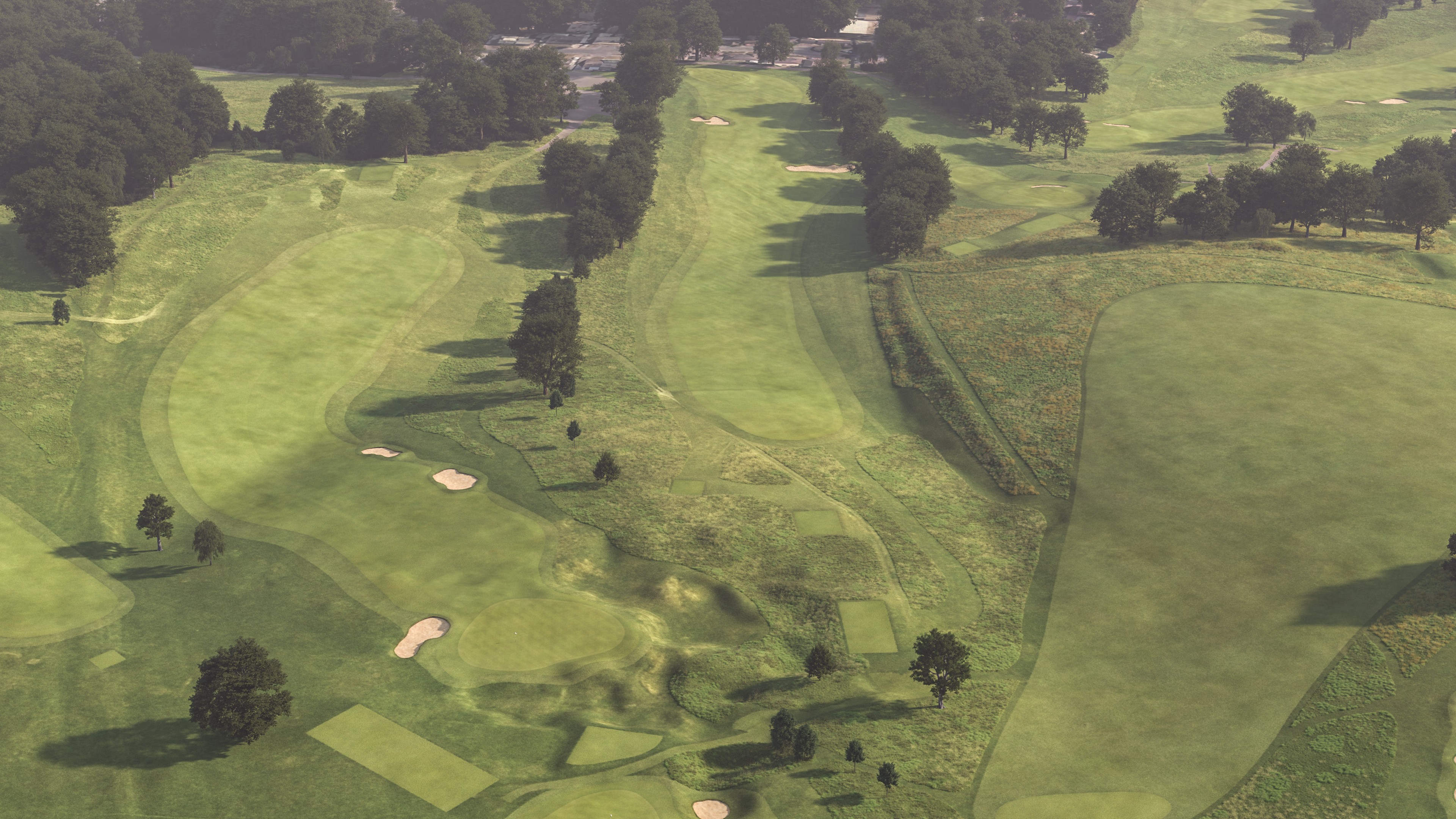
Public golf study

Reimagining Public Golf

A study exploring how a constrained public golf site could be transformed into a compact, engaging and commercially resilient golf landscape through engineered terrain, water capture, low-input maintenance, flexible routing and complementary leisure uses.

A study exploring how public golf can be reimagined through land creation, water management, flexible play and a broader leisure offer.
Project Type
Public golf / land creation
Landscape
Engineered landform
Location
North West England
Status
Ongoing study
Services
Routing study, landform strategy, public golf concept, water management and sustainability strategy, visualisation
Context

Reimagining public golf at a moment of rising access pressure

The cost of playing many of the UK’s best golf courses has risen sharply in recent years. For recreational golfers, and especially those near the entry point of the game, access to interesting, resilient and well-presented golf is becoming harder rather than easier. This is particularly acute in winter, when the types of course most likely to remain playable are often those least accessible on price.

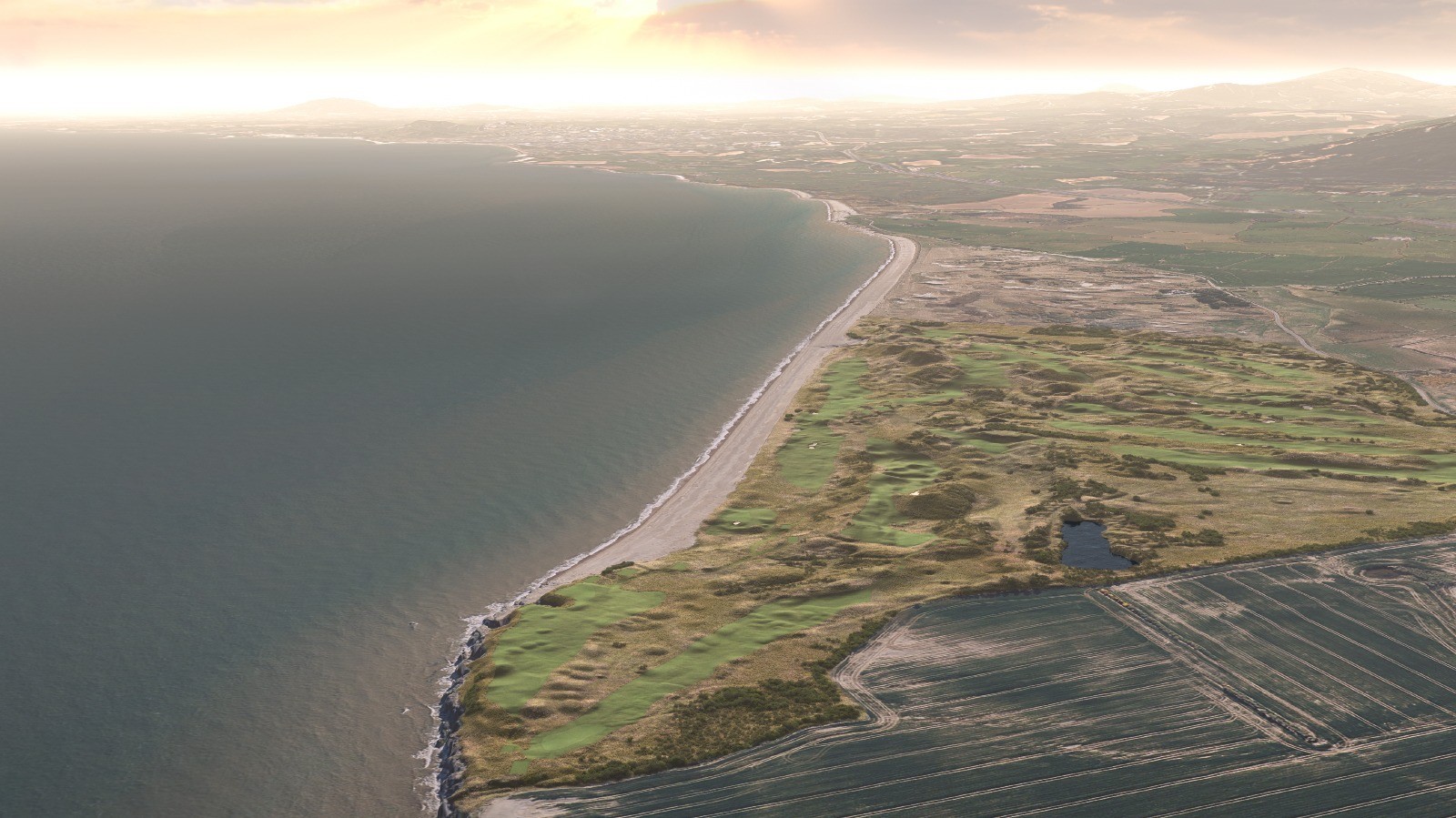
The study explored whether an underperforming public golf site could respond to that pressure by doing something more ambitious. Rather than retaining a large, weak and expensive-to-maintain footprint, the proposal focused on creating nine genuinely engaging holes, supported by a high-quality range, food and beverage, padel, football and publicly accessible ecological areas. The result was intended to be more desirable, more resilient and more financially sustainable.

The study treated landform as infrastructure, using engineered contour to create golfing interest, improve drainage, collect water and reduce reliance on expensive maintenance features.
Analysis

What the study needed to resolve

The project was shaped by a series of connected pressures: the changing economics of public golf, the need for a more compelling product, the cost of maintenance, the challenge of drainage and the opportunity to make a wider public landscape from land previously used almost entirely for golf.

01

Access to good golf was narrowing

As premium green fees have increased, many recreational golfers have found it harder to access interesting, resilient and well-presented courses. Public golf has an opportunity to respond, but only if it offers genuine quality rather than a tired low-cost alternative.

02

Nine better holes could outperform eighteen weaker ones

The study prioritised a compact, engaging and repeatable golf product over maximum hole count. A memorable 9-hole course can carry more cultural and commercial value than a longer facility that is expensive to maintain and weak architecturally.

03

The landscape had to do more than host golf

The proposal used landform to create strategic interest, improve drainage, support water capture, simplify maintenance and release space for wider leisure and ecological uses. The site was treated as a public landscape system, not just a course.

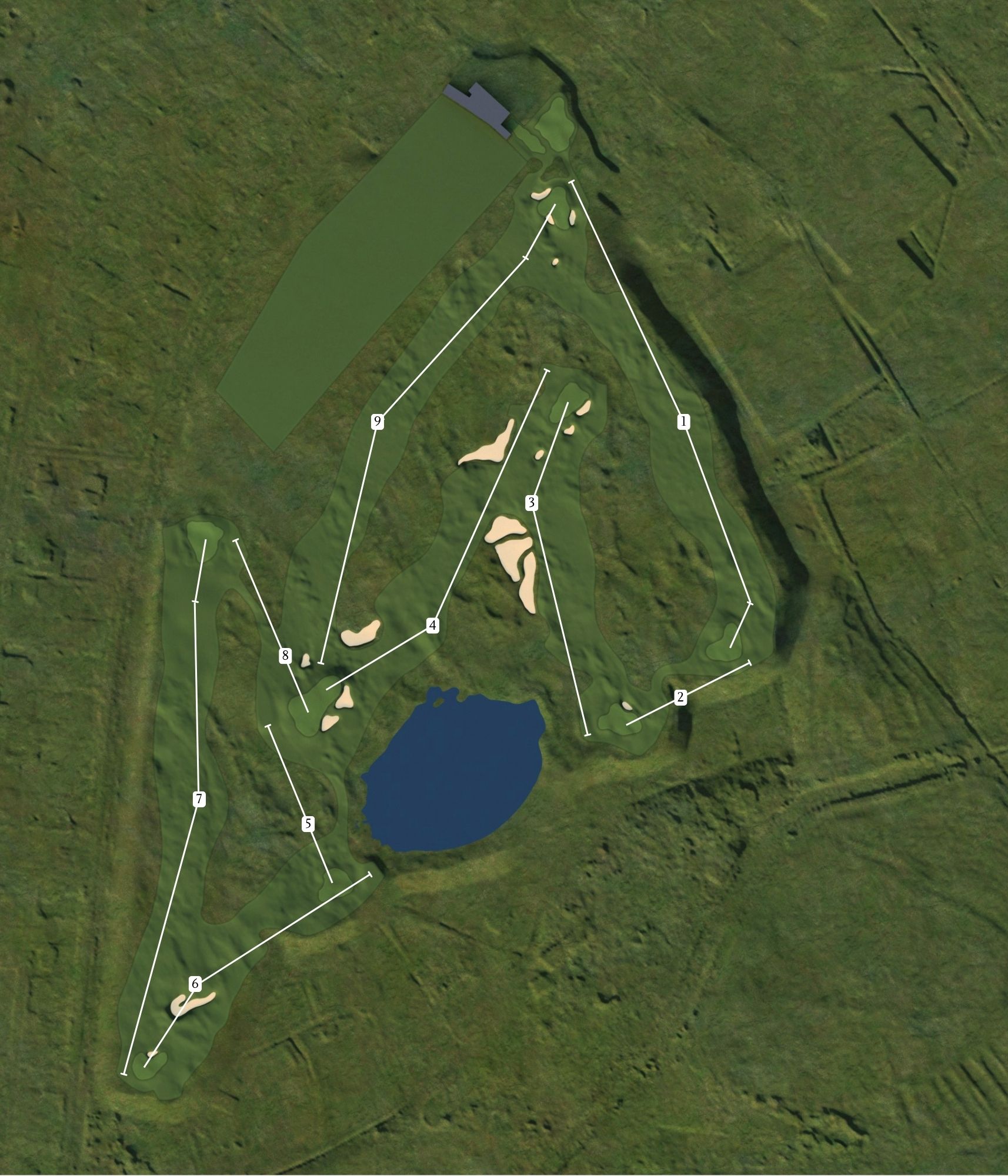
Slide left to reveal the reversible routing

One landscape, more than one way to play

The proposal treated the course as a flexible golf landscape rather than a fixed, single-direction routing. By allowing the same ground to be played in more than one way, the site could offer greater variety, stronger repeat appeal and different experiences for different users within a compact public facility.

This flexibility was central to the wider public golf model. A 9-hole course does not need to feel limited if the routing, landform and playing options are rich enough. Reversible golf allowed the site to work harder without increasing the maintained footprint.

Proposal

Principles behind the proposal

The study was built around a simple premise: public golf can be accessible without being ordinary. To achieve that, the golf needed to be more interesting, the maintenance model leaner, the water strategy more resilient and the wider site more useful to more people.

01

Invest in quality, not length

A public facility does not need eighteen holes to matter. It needs golf people actively want to play, talk about and return to.

02

Make maintenance part of the design

Landform-led strategy, autonomous mowing potential and a limited number of maintainable hazards can help reduce the cost of presenting a high-quality product.

03

Treat drainage as opportunity

By shaping the whole site around water movement, winter drainage and summer irrigation can become part of the same resilient system.

04

Broaden the public offer

Range use, food and beverage, padel, football and public ecological access can support a stronger business model while making the site useful to more people.

Key features

Four moves that shaped the study

The proposal was not a conventional golf course redesign. It was a study in how a complete public golf landscape could be remade from first principles, with architecture, water, maintenance, leisure and ecology working together.

01

A better public golf product

The study challenged the assumption that public golf must be judged by the number of holes it provides. Instead, it focused on creating a compact, engaging and repeatable course that would be more enjoyable to play, easier to present well and more commercially resilient.

The reduced footprint allowed the golf to become more focused and distinctive, while also freeing land for complementary leisure uses, public access and ecological value. The aim was not to make the facility smaller, but to make it more useful.

02

Creating interest from the ground

By designing the entire golfing landscape from scratch, the proposal could create strategy through contour, slope, ridge, bowl and run-off rather than relying on a high number of expensive hazards.

The created landform became the main architectural feature. It provided interest for the golfer, improved surface performance, helped organise water movement and reduced the maintenance burden required to present the course well.

03

Turning drainage into a strength

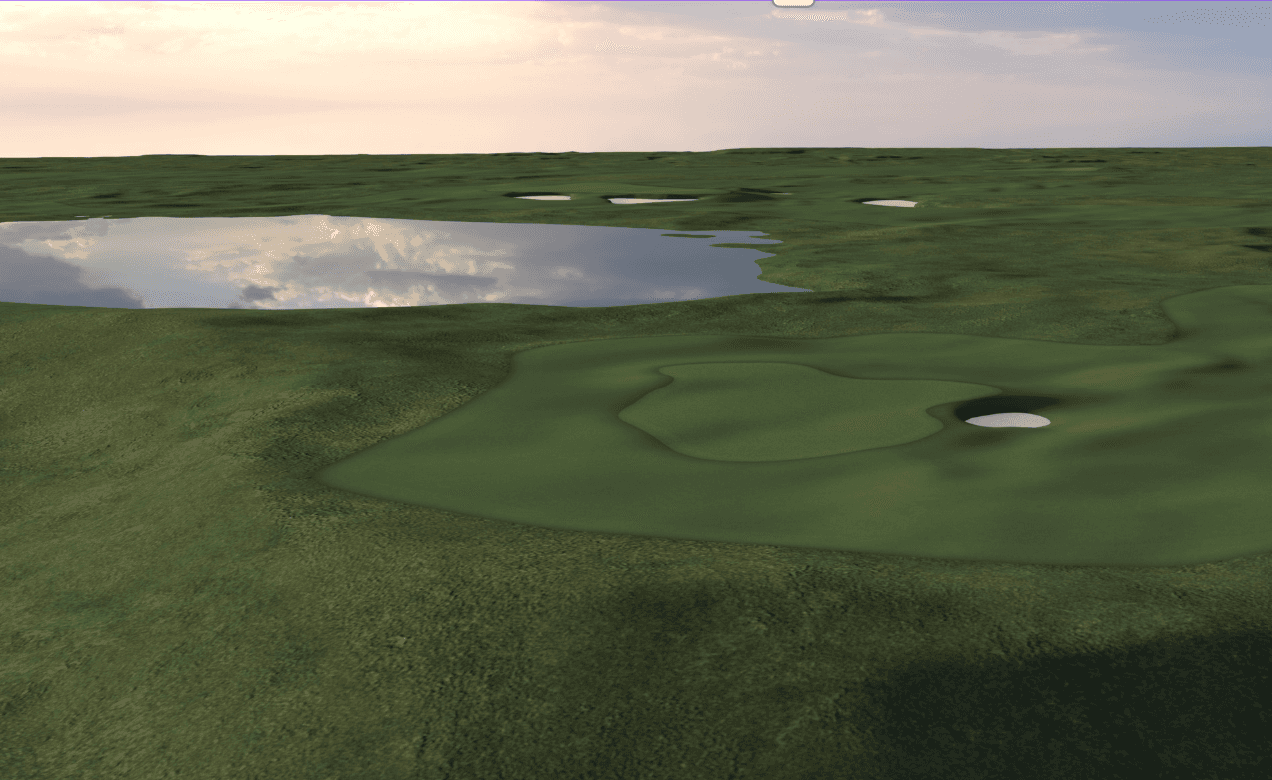
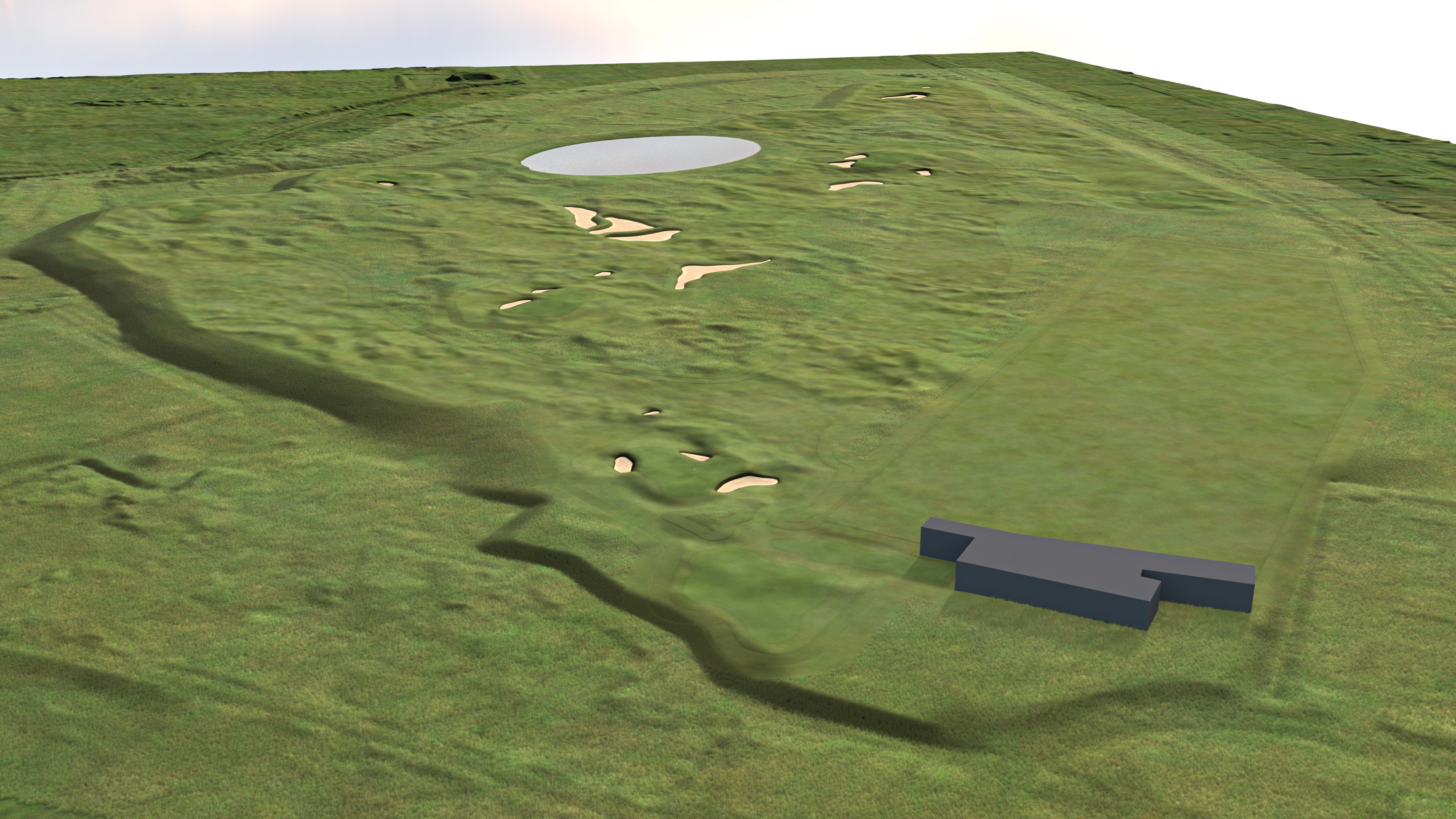
The ubiquitous problem of drainage was treated as a design opportunity. The landscape was shaped to collect and direct surface water towards a central reservoir, improving winter playability while creating a water source for summer irrigation.

Rather than separating drainage, irrigation and golf design into different technical exercises, the study brought them together. The same falls, hollows and landforms that shaped play also supported the movement, storage and reuse of water.

04

A public golf and leisure hub

The study combined golf with complementary leisure uses, including a high-quality driving range, food and beverage, padel courts and 3G football pitches. These elements were not add-ons, but part of the commercial and social model of the site.

Because the proposed 9-hole course and leisure hub occupied less land than the former 18-hole footprint, the wider site could also support publicly accessible ecological areas. The result was a more varied public landscape, with golf at its centre but not its only purpose.

Public Golf, Land Creation And Long-Term Resilience

A smaller footprint, a stronger golf product and a more useful public landscape

The proposal challenged the assumption that public golf must be measured by the number of holes offered. In this case, the more useful question was whether the site could become more valuable by reducing the golf footprint, improving the quality of the holes, creating a stronger leisure hub and allowing the remaining land to support ecology and public access.

By shaping the whole golfing landscape from scratch, the project could treat architecture and maintenance as connected problems. Contour, slope, ridge and run-off became the primary sources of interest, reducing reliance on numerous small hazards or high-input presentation. The ambition was to create golf that felt engaging and distinctive, while remaining realistic for a lean maintenance team to present well.

The same landform also allowed the site’s drainage challenge to become a strength. Surface water could be directed towards a central reservoir in winter, improving year-round playability, then reused through the irrigation system in summer. Golf, drainage, irrigation, ecology and commercial leisure were therefore considered as one integrated landscape system.
Start a conversation

Considering the future of your course?

Early conversations are often broad and informal. We are always happy to discuss projects at any stage.

Contact McD&C